What customers say
Solar Savings SolutionsSolar design and installation · Halifax, MA
Serving Halifax and nearby towns
★★★★★5.0 from 5 Google reviews
Private website concept.
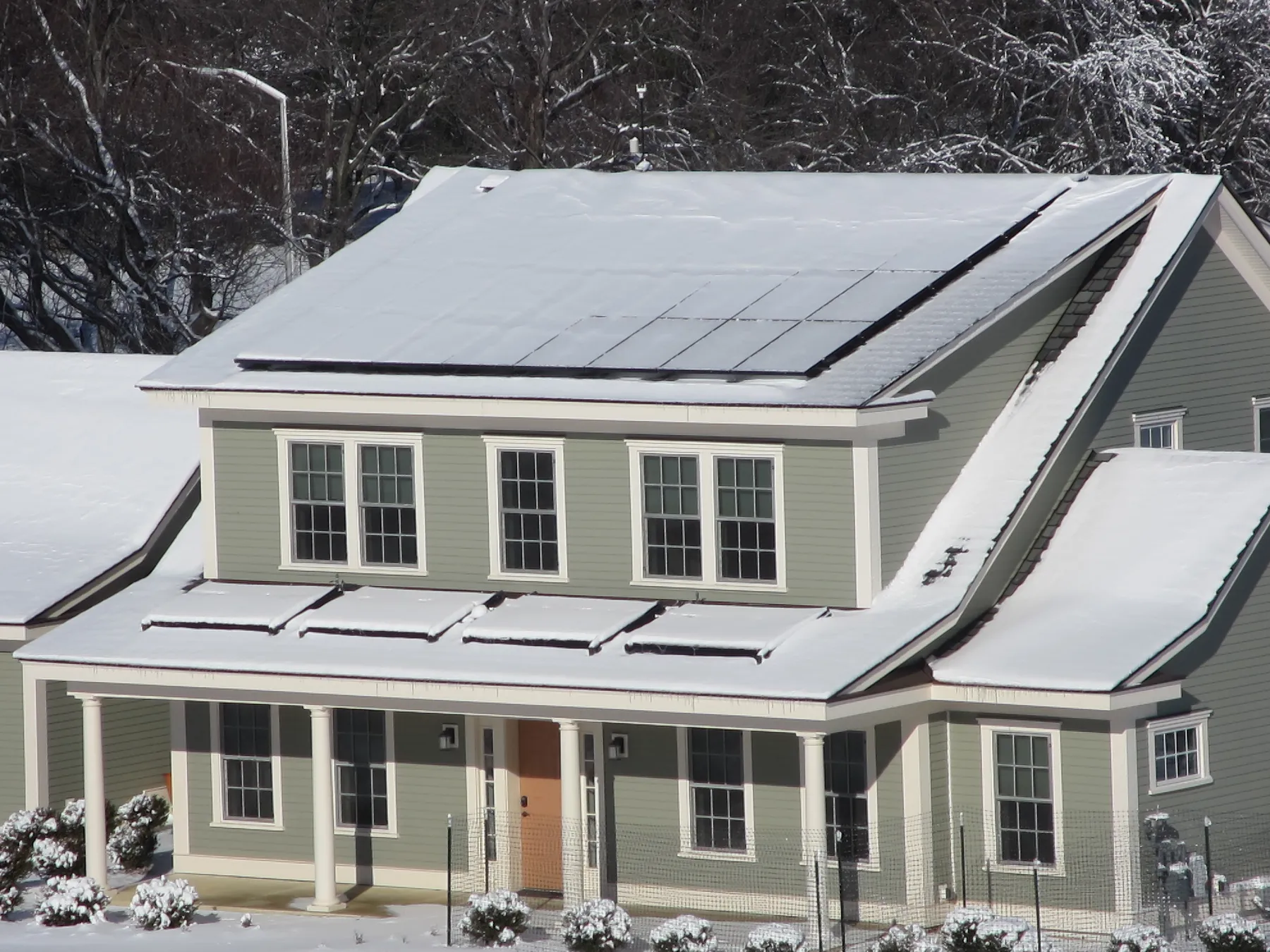
Halifax, Massachusetts
Before you accept a solar size in Halifax, MA, ask to see it against the heat pump and EV you plan. Solar Savings Solutions is a solar installation service that would quote today's use and next year's, show what the smaller array leaves you buying, and price the solar alone.
Halifax, Massachusetts
Solar Savings Solutions installs on the South Shore and the Cape edges, where a heat pump or an electric car is usually the next purchase. We model today's use and next year's, so the array is not undersized the moment the boiler goes.
What customers say
Serving Halifax and nearby towns
★★★★★5.0 from 5 Google reviews
What we do
Call or visit
| Phone | (508) 237-2623Call to book an assessment. |
|---|---|
| Office | 32 White Island Rd, Halifax, MA 02338Parking on site. |
| Estimates | Free, in writingDesign and price as separate documents. |
Why homeowners pick us
Our story
Installing across Halifax, Pembroke, Kingston, Plymouth and the South Shore.
Where we work
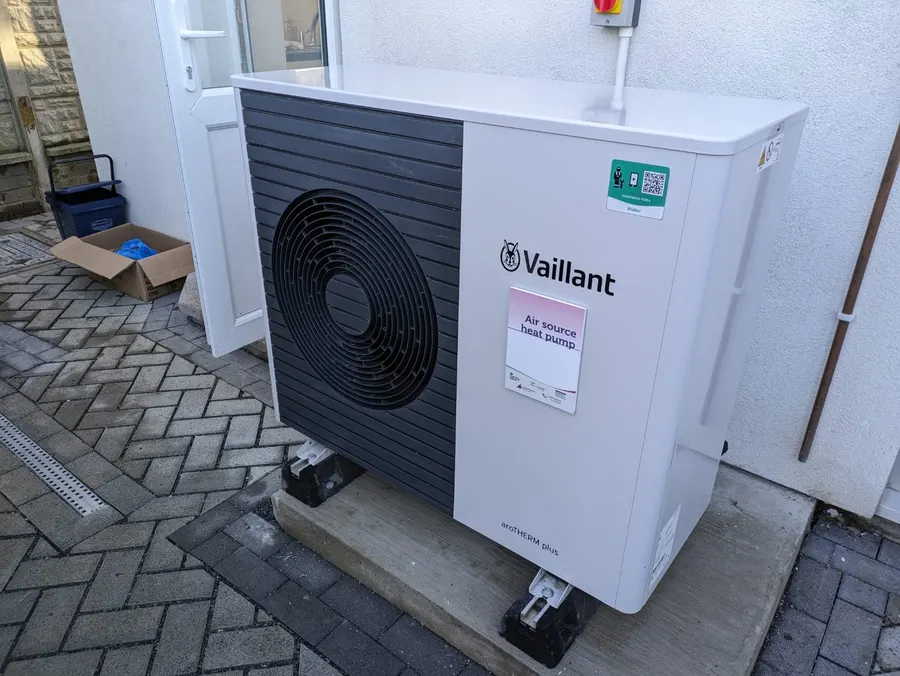
Proposed service. One installation, sized to the year after you add a heat pump or an EV, with every paper you need before you sign.
Enter today's use and what you plan to add. Column A sizes solar to the house today; Column B sizes it to the house after the heat pump and EV. It runs on this device and nothing is sent.
6,840 kWh a year
5.07 kW DC12 × 430 W panels = 5.16 kW DC
16,640 kWh a year (6,840 + 3,300 EV + 6,500 heat pump)
12.34 kW DC29 × 430 W panels = 12.47 kW DC
9,800 kWha year you would buy from the grid if you installed Column A and then added the heat pump and EV.
Column B is above 25 kW. Massachusetts' cap-exempt net metering and the simplified interconnection process apply to systems of 25 kW or less, so ask how the larger size changes the quote.
Illustrative calculation. Size is yearly kWh divided by 1,349 kWh per kW DC, EcoGen's statewide Massachusetts production factor (modeled, not measured on your roof), with example 430 W panels. Monthly shapes are illustrative: the heat pump weighted to November through April with some summer cooling, the EV spread evenly, solar following a typical Massachusetts year. Net-metering credits from summer surplus carry into winter. A site assessment and your contractor's heat-load calculation would replace every assumption.
Proposed service. Step two is where it differs: next year's loads are on the sheet before anyone picks a size.
Twelve months of kWh, plus the heat pump, EV and appliances you plan, and when they arrive.
Each new load becomes a line of yearly kWh, with the source of every assumption stated.
Usable roof faces, shade, roof age, and whether the electrical service carries a heat pump, a charger and solar.
Column A, Column B, the shortfall line and the solar-only price per watt.
Town building and electrical permits, interconnection and SMART, each with a named owner.
Built to the approved drawing, then inspected by the town.
The utility's written go-ahead, then a first-winter check against Column B.
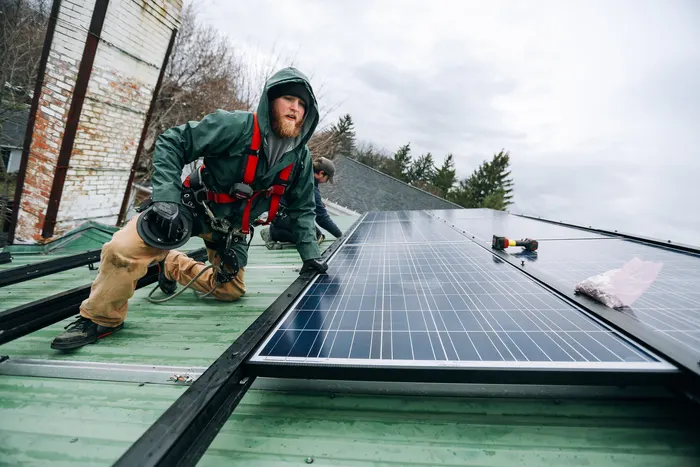
A quote built from one recent bill, or from last year's twelve, sizes the house as it was. If a heat pump or an EV is coming, that is the wrong year. Both move energy you now buy as oil, propane, gas or gasoline onto the electric meter. A bill-sized array can look right on signing day and fall short the first winter after you switch.
A kilowatt-hour (kWh) is the energy on your bill. System size is given in DC kilowatts (kW DC), the panels' combined rated output. The production factor links the two: the kWh each kW of panels makes in a year. EcoGen's Massachusetts benchmark uses about 1,349 kWh per kW, a statewide figure modeled for Boston, not measured on a Halifax roof. Divide a year's kWh by it and you have a first-pass size.
Annual sizing works in Massachusetts because of net metering. Under the state's net metering guide, credits for power you send to the grid are dollar amounts that never expire and roll over month to month. A summer surplus can therefore carry the November to April months, when a heat pump draws hardest. EcoGen's Massachusetts size table points the same way: about 9 kW for "EV or heat pump", 11 kW for both. Treat those as rough bands. EcoGen's own method notes say people size systems to their own home, roof and electricity price, and that is the job of a sizing sheet.
Hold the forecast to three rules:
How we work. Solar Savings Solutions is a solar service for Halifax-area homeowners; nothing here is an operating offer yet. It would size one installation to your forecast year and give you five documents before you sign.
| Document | What it answers |
|---|---|
| Two-column sizing sheet | Column A sizes to today's 12-month use, Column B to the forecast after the heat pump and EV. Each shows kWh per year, DC kW, panel count, production with shade assumptions, total price and price per watt |
| Shortfall line | The kWh, and rough dollars, you would buy from National Grid if you installed Column A and then electrified |
| Roof-fit statement | Whether Column B fits. If not, what share of next year's load the roof covers, and the next option: another roof face, a ground mount, or accepting the gap |
| Service and panel note | Whether the panel or service needs an upgrade to carry the heat pump, a Level 2 charger and the solar together, priced as its own line |
| Responsibility sheet | A named owner for the building and electrical permits, interconnection application, SMART enrollment, net-metering form, heat-pump-rate check and meter swap |
Three choices would stay with you. Size: Column A, Column B, or the largest size the roof holds. Mounting: roof, or a ground mount when the roof falls short (Halifax adds wetlands, flood and septic checks for those, below). Extras: a service upgrade, roof work, an EV-charger circuit and a battery would each be optional and priced separately, never folded into the solar price per watt. The assessment and the documents would be part of the service. It is one install sized to an annual forecast, and no battery is required for the sizing to work.
The assessment would take about two to three hours on site (Illustrative example; no operator has set a visit length). It would check seven things, in order:
What to bring: twelve months of kWh use (online account or twelve bills), the heat-pump contractor's quote or heat-load calculation if you have one, your EV plan, a clear photo of the main panel showing the main breaker's amp rating, and the roof's age or last roofing invoice.
Illustrative calculation. A Halifax household on National Grid uses 6,840 kWh a year today: 570 kWh a month, the Massachusetts average in EcoGen's v1-2026 data, not a Halifax figure. Next year it plans:
- An EV driven 11,000 miles a year at 0.30 kWh per mile at the wall: 3,300 kWh. The Alternative Fuels Data Center's example uses 27 kWh per 100 miles; the extra 0.03 covers charging losses, in line with the 84% to 93% charging efficiency fueleconomy.gov gives.
- A whole-home heat pump at 6,500 kWh, a placeholder, not a typical Halifax figure. Replace it with your contractor's heat-load calculation.
Forecast: 6,840 + 3,300 + 6,500 = 16,640 kWh a year.
| Illustrative calculation | Column A (today) | Column B (forecast) |
|---|---|---|
| Yearly use sized for | 6,840 kWh | 16,640 kWh |
| Size at 1,349 kWh per kW | 5.07 kW DC | 12.34 kW DC, rounded to 29 × 430 W panels = 12.47 kW DC |
| Price at the $3.02/W state benchmark | ≈ $15,300 | ≈ $37,660 |
| Benchmark band ($2.87–$3.17/W) | ≈ $14,550–$16,070 | ≈ $35,790–$39,530 |
| SMART at the 2026 rate ($0.03/kWh) | ≈ $205 a year | ≈ $505 a year (about 16,820 kWh) |
| Halifax building permit fee, on the benchmark price | ≈ $184 | ≈ $452 |
| Halifax solar electrical permit fee, on the benchmark price | $250 (the minimum) | ≈ $377 |
Shortfall line (Illustrative calculation). Install Column A, then electrify, and the house buys 16,640 − 6,840 = 9,800 kWh a year from National Grid. At 30 cents per kWh, the low end of EcoGen's 30 to 34 cent range for National Grid bills, that is about $2,940 a year, before any seasonal heat-pump-rate discount.
Column B costs about $22,360 more up front at the benchmark, roughly two and a half times Column A. The shortfall line is the number to set against that gap, along with the extra SMART payments. Neither column is automatically right. A household that will not have the heat pump for three years may prefer Column A now; one that has the heat-pump contract signed probably wants Column B. Both columns stay under 25 kW, so net-metering and SMART treatment match.
Roof-fit check (Illustrative example). Column B needs room for 29 panels. If the sunny faces hold only 20, the roof-fit statement would say so: about 69% of the forecast covered (20 ÷ 29), with the remaining options priced. All production here uses EcoGen's statewide factor; yours comes from your roof's shade report.
Price moves with system size, usable roof faces and shade, the panels and inverter (the box that turns DC power into the AC your house uses), and roof condition. An electrification-sized quote may also carry a service upgrade, an EV-charger circuit and a battery. Those are real costs, but they are not solar. Leave them in and a fairly priced array looks overpriced.
EcoGen's Massachusetts cost page puts the state benchmark at $3.02 per watt, with typical quotes between $2.87 and $3.17 (State benchmark, September 2026 Edition, prices as of September 25, 2026). EcoGen defines it as a modeled installed price before incentives for a representative home system, paid in cash. No EcoGen figure exists for Halifax itself, so the state number is the yardstick.
Run the check in four steps:
| Illustrative calculation (Column B quote) | Total | ÷ 12,470 W |
|---|---|---|
| One line: $38,900 solar + $3,200 service upgrade to 200 A + $1,100 charger circuit | $43,200 | $3.46/W, above the band |
| Solar only | $38,900 | $3.12/W, inside the band |
Same quote, two readings. The bundled figure could push a buyer toward a smaller array; the solar-only figure shows the panels priced normally. The East Bridgewater page walks through the same split. The benchmark is a cash price, so if you finance, ask for the cash price as well and run the check on that.
Rooftop solar in Halifax needs a building permit and a separate electrical permit, filed with the Halifax Building Department through the town's online permitting portal. Applications from July 1, 2025 must meet the 10th Edition Massachusetts Building Code.
Under the town's posted procedures, the Building Inspector collects the Tax Collector, Conservation Commission and Board of Health sign-offs, and the contractor files an affidavit showing its Construction Supervisor License and/or Home Improvement Contractor registration plus workers' compensation.
The Halifax fee schedule (effective July 1, 2024):
| Permit line | Posted fee | Who would file it |
|---|---|---|
| Building, solar panels | $150 minimum or $12 per $1,000 of contract cost | Solar contractor |
| Electrical, solar panels | $250 minimum or 1% of cost | Solar electrician |
| Electrical, service change | $100 up to 100 A, plus $50 per extra 100 A | Whoever does the upgrade |
| Sheet metal, HVAC system | 1% of cost | Heat-pump contractor |
"Minimum or" most likely means whichever is greater; confirm with the office. On that reading, the 200 A service change in the price example would add a $150 electrical permit ($100 + $50; Illustrative calculation). Solar and storage fees may be adjusted at the inspector's discretion, and unpermitted work pays double. A ducted heat pump would fall under the HVAC line, filed by the heat-pump contractor, so the electrification plan can touch three or four lines on this schedule.
Halifax's Local Historic District, which includes Lyonville, covers sections of Plymouth, South, Carver, Thompson and Old Plymouth Streets, up to 300 feet from the road's centerline or to the property line, under the town's Historic District By-Law. The Historic District Commission controls exterior changes visible from a public street, way or park.
If you live on one of those streets, ask the Building Inspector's office first, and ask to see the district map for your parcel. The town's procedures make finding out the applicant's job. Where the by-law applies, no building permit issues until the commission grants a certificate (its written approval, or a finding that review isn't needed). It decides within 14 days whether to review, and within 30 days if it does. M.G.L. c.40C §7 requires it to weigh the state's policy of encouraging solar and protecting solar access. Whether a rear face hidden from the street is outside its control is the commission's call, so allow about a month for that answer.
If Column B doesn't fit the roof, a ground mount adds three checks:
The May 2026 text of Halifax's zoning by-law contains no solar section, and state law bars zoning that unreasonably regulates solar. Confirm ground-mount setbacks with the Building Commissioner.
The order, with each step's owner:
Halifax is National Grid (Massachusetts Electric) territory on the state's electricity-provider map; check the name on your bill anyway. The town's aggregation program changes your supplier, not the wires utility.
Neighboring towns differ: some Pembroke addresses and all of Kingston are on Eversource, with a different portal and heat-pump-rate contact.
Net metering. At 25 kW or less, the system is cap-exempt, and the value of each credit follows your rate class. That last point is why the heat-pump rate below matters.
SMART is the state's solar incentive, paid per kWh produced. National Grid's SMART 3.0 tariff (effective July 1, 2026) pays systems up to 25 kW AC a flat $0.03 per kWh in 2026 ($0.06 for low-income customers) for 20 years, fixed when the system qualifies. The 2027 rate is not yet set; the tariff says "TBD". Payments need National Grid's written authority to interconnect, and the utility takes title to the system's renewable energy certificates (the tradable proof that clean power was made) for the term.
Interconnection. National Grid's revised tariff is reported to raise the simplified-process limit to 25 kW, and regulators approved a $225 fee for systems up to 25 kW that covers the first $10,000 of any grid upgrade. Check whether both are in force for your application. A bigger, electrification-sized array is likelier to need an upgrade, so ask who pays above $10,000.
Heat-pump rate. National Grid offers a seasonal heat-pump rate with lower distribution and transmission charges on all your kWh from November 1 to April 30. Homes with a Mass Save heat-pump rebate since 2019 are enrolled automatically; others sign up. A heat-pump water heater alone doesn't qualify.
The public pages checked for this page don't settle how National Grid values net-metering credits for a customer on this rate. Ask National Grid in writing before you finalize the size, because the answer changes what a banked summer credit covers in January.
Ask the installer how you would check that the array delivers what Column B promised:
Use these with any Halifax quote, alongside the quote checklist on this site:
Coverage beyond Halifax, including neighboring towns such as Hanson, covers these towns.
Not for a system you buy. The IRS residential clean energy credit page says it is not available for property placed in service after December 31, 2025. Federal credits for heat pumps, for EVs acquired after September 30, 2025, and for home chargers placed in service after June 30, 2026 have ended too. Some installer pages still advertise one; check the date. With a lease or power-purchase agreement, the provider may claim a business credit; ask how that shows in your price.
It depends on your use, the system's production and how National Grid credits exports, plus the SMART payment. A single savings number hides the choice that matters here. Compare the two columns on your sizing sheet, and the shortfall line between them.
According to EcoGen's Massachusetts incentives summary (checked September 30, 2026): a 15% state income-tax credit up to $1,000, a sales-tax exemption on solar equipment, and a 20-year property-tax exemption for systems of 25 kW or less, or up to 125% of the property's yearly use. Confirm the credit with the Massachusetts Department of Revenue before counting on it.
Each guide covers that town's wires utility, permit route and quote checklist. We work across all of these towns.
Wires utility from the state's Electricity Providers by Town map (DPU data as of October 2025). Check the name on your own bill.
Choose your town and what you plan to add. This private preview builds the checklist to take to any installer, including the two-column sizing request.
It runs on this device and nothing is sent. There is no phone line, email or form behind this concept.